
How a Rigid Esophagoscope Is Revolutionizing Swallowing Disorder Diagnostics
Swallowing disorders affect millions worldwide, causing discomfort, malnutrition, and a reduced quality of life. In recent years, the Rigid Esophagoscope has emerged as a game-changer in diagnosing these challenging conditions. By combining direct visualization with minimal invasiveness, the Rigid Esophagoscope offers clinicians new insights into esophageal health. This article explores how the Rigid Esophagoscope is transforming diagnostics, improving patient comfort, and paving the way for faster, more accurate treatment plans.
Understanding Swallowing Disorders
Swallowing disorders—collectively known as dysphagia—can arise from a variety of causes: neurological disorders, structural abnormalities, or motility issues. Common symptoms include pain when swallowing, regurgitation, or the sensation of food getting stuck. Traditional evaluations often rely on barium swallow studies or flexible endoscopy, which, while useful, have limitations in resolution and direct access.
The Rigid Esophagoscope addresses these gaps by allowing physicians to directly inspect the upper and middle esophagus under high magnification. With this device, subtle lesions, strictures, or rings that might be missed by other methods become glaringly obvious. Incorporating the Rigid Esophagoscope into a diagnostic workflow can cut down on follow-up procedures and reduce diagnostic uncertainty.
Traditional Diagnostic Tools and Their Limitations
Clinicians have long depended on a suite of tools to assess dysphagia, including:
-
Barium Swallow Radiography: Provides a broad view of swallowing mechanics but lacks fine detail.
-
Flexible Endoscopy: Allows real-time viewing but can have blind spots in certain esophageal segments.
-
Manometry: Measures pressure waves but offers no visual confirmation of structural anomalies.
While each method serves its purpose, together they often necessitate multiple visits. Enter the Rigid Esophagoscope, which streamlines the process by delivering high-resolution images and enabling targeted biopsies all in one session. By integrating a Rigid Esophagoscope, clinics can reduce patient visits, cut diagnostic time, and lower overall healthcare costs.
What Is a Rigid Esophagoscope?
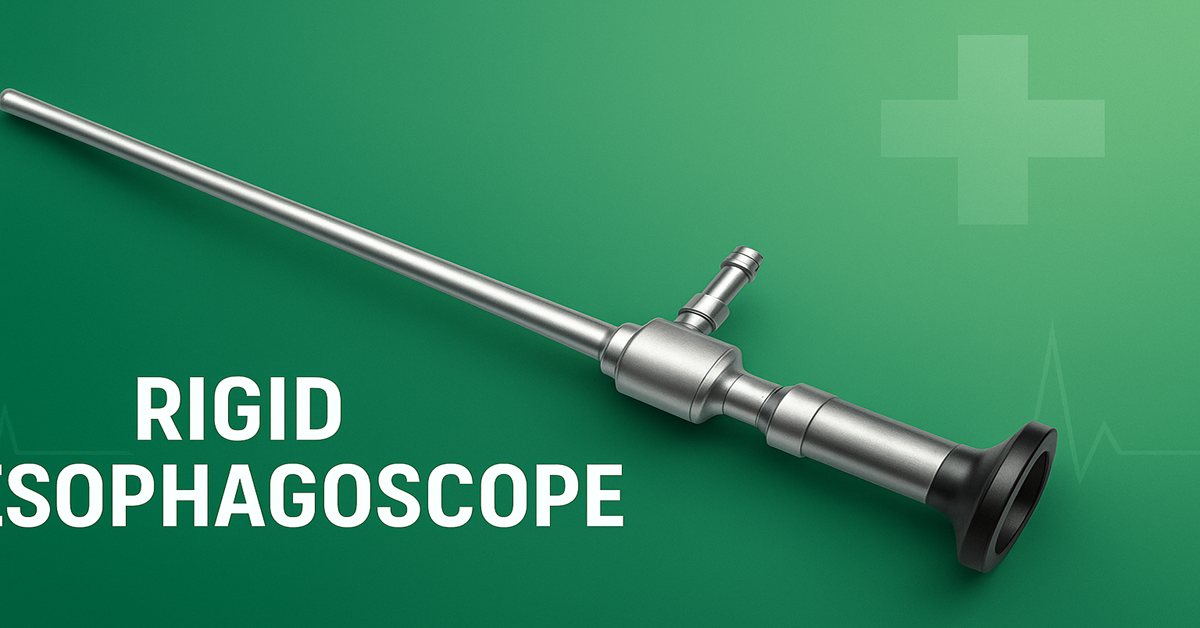
A Rigid Esophagoscope is a straight, hollow metal tube equipped with a light source and optical system. Unlike its flexible counterpart, it provides a stable platform for examining the esophagus. Key features include:
-
High-Definition Optics: Magnifies small mucosal changes.
-
Adjustable Angulation: Fine-tunes the viewing angle.
-
Accessory Channel: Facilitates biopsy or foreign body removal.
Because the Rigid Esophagoscope maintains a fixed shape, it minimizes motion artifact and provides consistent, reproducible views. Experienced endoscopists value the Rigid Esophagoscope for its precision, especially when assessing early neoplastic changes or subtle motility disorders.
How the Rigid Esophagoscope Works
During a Rigid Esophagoscope procedure, the patient is typically under conscious sedation or general anesthesia. The steps include:
-
Positioning: The patient lies supine with neck extension.
-
Insertion: The clinician gently introduces the Rigid Esophagoscope through the mouth, past the pharynx, into the esophagus.
-
Visualization: With the light source activated, the endoscopist inspects the esophageal lining frame by frame.
-
Intervention: If needed, biopsy forceps or balloon dilators are passed through the accessory channel of the Rigid Esophagoscope.
Because of its rigidity, the Rigid Esophagoscope provides a tactile feedback loop, alerting the physician to unusual resistance—an early sign of strictures or tumors. This sensory input complements the high-definition visuals, making the Rigid Esophagoscope a dual-mode diagnostic tool.
Advantages of Rigid Esophagoscope in Diagnostics
The Rigid Esophagoscope offers several important benefits:
-
Superior Image Quality: The rigid optics of the Rigid Esophagoscope deliver crisp, clear images that detect mucosal irregularities down to a fraction of a millimeter.
-
Direct Tissue Sampling: Using the channel in the Rigid Esophagoscope, clinicians can obtain targeted biopsies, reducing non-diagnostic sampling errors.
-
Reduced Procedure Time: Because visualization and intervention occur in one setting, total procedure time decreases compared to multiple, separate tests involving the Rigid Esophagoscope.
-
Cost-Effectiveness: Fewer repeat studies mean lower overall costs for both providers and patients.
-
Safety Profile: With experienced operators, the Rigid Esophagoscope carries a low complication rate, comparable to flexible endoscopy.
By leveraging these advantages, the Rigid Esophagoscope is setting a new standard for swallowing disorder diagnostics, allowing for earlier interventions and improved patient prognoses.
Patient Experience and Comfort
A common concern with rigid instruments is discomfort. However, modern Rigid Esophagoscope designs prioritize patient comfort:
-
Slim Profile: Contemporary Rigid Esophagoscope models have a narrower diameter, easing insertion.
-
Ergonomic Handles: These reduce operator fatigue and allow smoother manipulation of the Rigid Esophagoscope.
-
Quick Recovery: Due to its efficiency, patients spend less time under sedation when the Rigid Esophagoscope is used.
In most cases, recovery from a Rigid Esophagoscope procedure is swift. Patients can resume normal activities within hours, often reporting only mild throat soreness. This rapid turnaround enhances patient satisfaction and willingness to undergo necessary follow-up assessments using the Rigid Esophagoscope.
Clinical Impact and Future Directions
The introduction of the Rigid Esophagoscope in routine practice has already shown promise in several areas:
-
Early Cancer Detection: Small Barrett’s esophagus lesions, often precursors to esophageal cancer, are more easily spotted with the Rigid Esophagoscope.
-
Stricture Management: Precise dilation under direct vision reduces the risk of perforation when using the Rigid Esophagoscope.
-
Motility Studies: Combining high-speed imaging with mechanical feedback from the Rigid Esophagoscope enhances the study of esophageal motility disorders.
Looking ahead, integrating artificial intelligence (AI) with the Rigid Esophagoscope may further boost diagnostic accuracy. AI-driven image analysis could flag suspicious areas in real time, alerting physicians to abnormalities that would otherwise be easy to overlook. As these technologies converge, the Rigid Esophagoscope will remain at the forefront of esophageal diagnostics.
Conclusion
The Rigid Esophagoscope represents a significant leap forward in the diagnosis of swallowing disorders. By offering unparalleled image clarity, direct intervention capabilities, and streamlined workflows, the Rigid Esophagoscope enhances accuracy, reduces costs, and improves the patient experience. As clinical adoption grows and new innovations—like AI integration—emerge, the Rigid Esophagoscope will continue to revolutionize how healthcare providers approach esophageal health. For anyone seeking the latest in dysphagia diagnostics, the Rigid Esophagoscope stands out as a truly transformative tool.